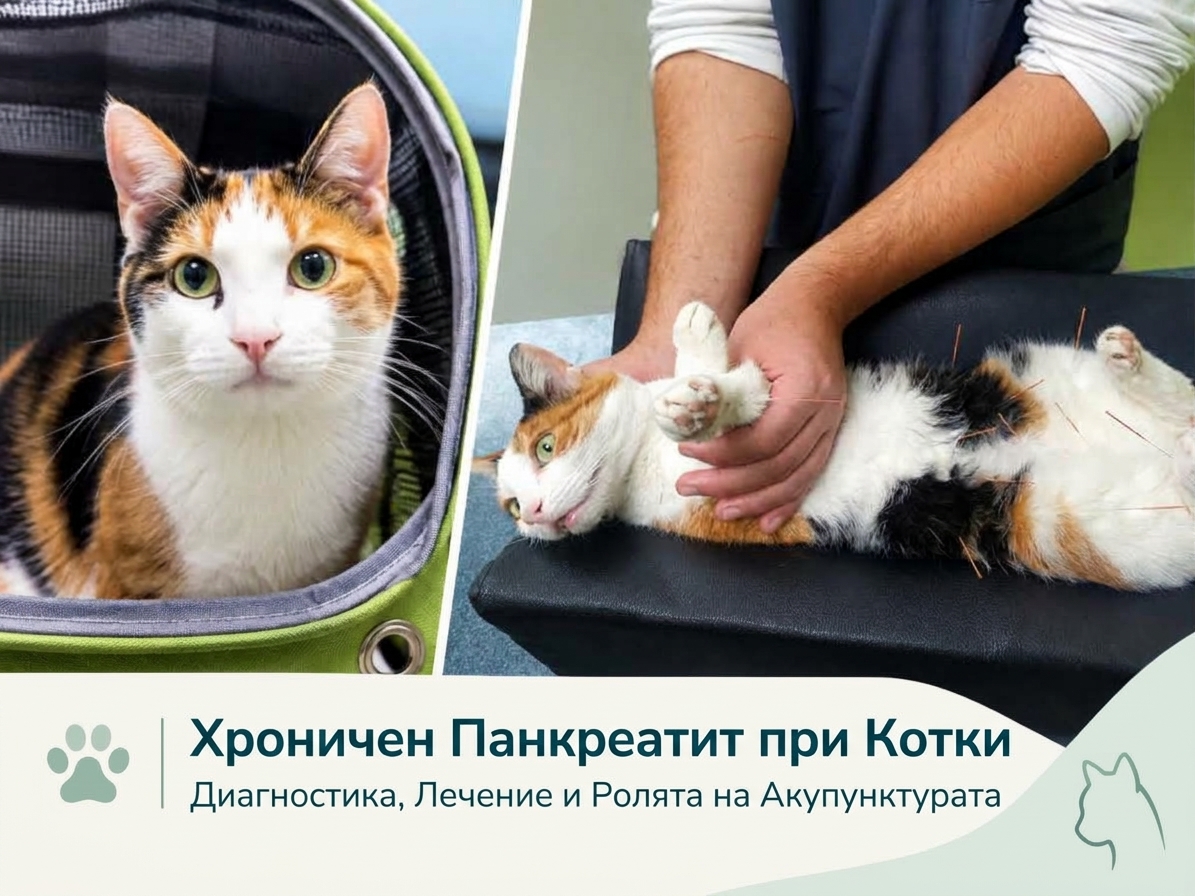
Feline pancreatitits
Chronic Pancreatitis in Cats: Diagnosis, Treatment, and the Role of Acupuncture
Chronic pancreatitis is a condition that was once thought to be relatively uncommon in cats. We now know that it is much more prevalent than previously believed. The difficulty is that feline pancreatitis often causes vague, intermittent signs and can go unnoticed for a long time.
A cat may simply start eating less, lose weight, vomit occasionally, or develop changes in its stool. Because these signs can be mild or come and go, they are sometimes mistaken for a “sensitive stomach,” especially when the cat seems perfectly normal between episodes.
Meanwhile, chronic inflammation may be affecting the pancreas.
In this article, we look at what chronic pancreatitis is, how it is diagnosed and treated, and how veterinary acupuncture and moxibustion can be incorporated into an integrative approach in selected patients.
What is pancreatitis?
The pancreas plays an essential role in both digestion and metabolism. Pancreatitis is inflammation of the pancreatic tissue.
In cats, pancreatitis is generally classified as either acute or chronic. In practice, however, distinguishing between the two based on clinical signs alone can be challenging. Both forms can range from mild to severe.
With chronic pancreatitis, inflammation may persist over a prolonged period and gradually damage the pancreatic tissue.
Interestingly, the condition appears to be much more common than previously thought. One study cited in the original publication, involving 115 cats, found chronic pancreatitis in 50.4% of the animals, acute pancreatitis in 6.1%, and concurrent acute and chronic pancreatitis in 9.6%. Inflammatory changes in the pancreas were also found in some cats that were considered clinically healthy.
This is one of the reasons feline pancreatitis can be so difficult to recognise: sometimes it progresses quietly, with only subtle signs.
What causes pancreatitis?
In many cases, the underlying cause cannot be identified.
Potential contributing factors described in the literature include:
-
infections;
-
trauma;
-
surgery;
-
impaired blood supply to the pancreas;
-
low blood pressure during anaesthesia;
-
certain medications.
In cats, pancreatitis also commonly occurs alongside other diseases affecting the gastrointestinal tract, liver, and biliary system.
Associated conditions may include chronic enteropathies, inflammatory bowel disease (IBD), cholangitis, hepatic lipidosis, diabetes mellitus, and other disorders.
The close relationship between the pancreas, liver, and intestines is particularly important. When these organs are affected at the same time, the condition is commonly referred to as feline triaditis.
What signs should cat owners look out for?
The signs of pancreatitis in cats are often non-specific.
A cat may develop:
-
reduced or complete loss of appetite;
-
weight loss;
-
vomiting;
-
diarrhoea or changes in stool;
-
abdominal pain;
-
lethargy;
-
dehydration;
-
reduced activity;
-
periods of apparent improvement followed by another episode of illness.
This is one of the main reasons chronic pancreatitis can be difficult to recognise.
Cats also tend to hide signs of pain. Sometimes the only changes an owner notices are that the cat is eating less, hiding more than usual, becoming less active, or gradually losing weight.
How is pancreatitis diagnosed?
Diagnosing pancreatitis in cats usually requires a combination of clinical findings, laboratory tests, and diagnostic imaging.
Depending on the individual patient, the diagnostic work-up may include:
-
a thorough clinical examination;
-
complete blood count and serum biochemistry;
-
pancreatic lipase testing (fPL);
-
abdominal ultrasound;
-
additional tests to rule out other conditions that can cause similar signs.
It is important to remember that a normal ultrasound does not rule out pancreatitis.
Likewise, no single laboratory result should be interpreted in isolation. For example, fPL is a valuable diagnostic tool, but the result needs to be considered alongside the cat's clinical signs and other test findings.
Histopathology is considered the reference standard for identifying pancreatic changes, but obtaining a tissue sample is invasive and therefore not appropriate or necessary in every patient.
Treating pancreatitis: why can it be challenging?
There is no single treatment protocol that works for every cat with chronic pancreatitis.
Treatment is tailored to the individual patient and may include:
-
intravenous or subcutaneous fluid therapy when needed;
-
medication to control nausea and vomiting;
-
appropriate pain relief;
-
treatment of concurrent diseases;
-
antibiotics when there is a specific indication;
-
nutritional support;
-
an appropriate diet;
-
additional supportive therapies based on the patient's individual needs.
Nutrition is especially important
Prolonged fasting is generally not recommended in cats. When a cat stops eating for an extended period, there is a risk of developing hepatic lipidosis, a potentially serious liver condition.
For this reason, restoring food intake as early as possible, when the patient's condition allows, is an important part of treatment.
In the clinical case described below, nutritional support included pancreatic enzymes, fibre, and a probiotic, selected according to the patient's individual needs.
Where do acupuncture and moxibustion fit in?
Veterinary acupuncture can be used as a complementary part of an integrative treatment approach in selected patients.
This does not mean replacing conventional veterinary medicine. Appropriate diagnostics, medical treatment, nutritional support, and monitoring remain the foundation of care, particularly in acute or severe cases.
Instead, complementary therapies may be used to help manage some of the problems associated with chronic disease, such as pain, nausea, gastrointestinal discomfort, reduced appetite, and overall wellbeing.
In the clinical case presented here, we used a combination of acupuncture and moxibustion.
Sessions lasted approximately 30 minutes and were performed daily or every other day, depending on the patient's condition.
What is moxibustion?
Moxibustion is a traditional Chinese medicine technique in which specific areas or acupuncture points are gently warmed using moxa.
Within traditional Chinese medicine, this warming effect is thought to influence the movement of Qi and Xue, warm the channels, and support the balance between Yin and Yang.
From a modern physiological perspective, local heat may influence microcirculation, muscle tone, and the perception of pain. Research has also explored possible anti-inflammatory and immunomodulatory effects.
In this case, acupuncture and moxibustion were combined to address both gastrointestinal discomfort and pain.
A clinical case from LILIVET Veterinary Clinic, Stara Zagora
We would like to share the case of a 13-year-old spayed female European Shorthair cat, tricolour, weighing 2.3 kg.
For approximately five months, the cat had experienced intermittent episodes of bright red blood in her stool. A rapid Giardia antigen test performed previously had been negative.
By the time she was brought to our clinic, her condition had deteriorated significantly.
She was lethargic, had stopped eating and drinking, and was experiencing vomiting and diarrhoea.
On clinical examination, we found:
-
body temperature: 37.4°C;
-
heart rate: 140 beats/minute;
-
respiratory rate: 60 breaths/minute;
-
pale, dry mucous membranes;
-
prolonged capillary refill time;
-
approximately 7% dehydration;
-
dry skin with dandruff;
-
dark yellow, strongly odorous urine;
-
a soft abdomen with mild pain on palpation;
-
weight loss;
-
a dry, red tongue;
-
a pain score of 4.
Blood tests showed changes consistent with dehydration, as well as increased globulin, ALT, amylase, and fPLi levels. Abdominal ultrasound and radiography did not reveal significant abnormalities in the internal organs.
Based on the clinical findings and test results, the patient was diagnosed with chronic pancreatitis and haemorrhagic colitis.
Initial treatment
During the first four days, the patient received conventional medical treatment, including intravenous fluid therapy, an antiemetic, gastric protection, antibiotic therapy, and analgesia.
The vomiting was successfully controlled.
However, the main problem remained: the cat continued to refuse food and water and remained depressed and lethargic.
Adding acupuncture and moxibustion
At this point, acupuncture using sterile, single-use needles in the abdominal region was added to the treatment protocol, together with moxibustion according to the selected therapeutic plan.
Just two hours after the treatment, the cat began eating voluntarily.
At the same time, her pain score decreased from 4 to 2.
As her condition improved, antibiotic and analgesic therapy was discontinued, while nutritional and supportive treatment continued.
Pancreatic enzymes, fibre, and a probiotic were included in the subsequent management plan.
The cat was discharged on day 10 with a stable appetite. During follow-up, only occasional episodes of reduced appetite were observed.
Acupuncture and moxibustion were initially performed every other day. The frequency was then gradually reduced to once a week for six weeks, followed by treatments every two weeks and, later, once a month for a further two months.
During the later treatment period, 100 ml of Ringer's solution was administered subcutaneously in the dorsal region before moxibustion, as the therapeutic approach used in this case considers the cooling effect of fluids and the warming effect of moxibustion to be incompatible when applied immediately in the same area.
How might acupuncture work?
The mechanisms through which acupuncture may influence the body are still being investigated.
One of the main proposed mechanisms involves activation of the body's endogenous pain-control systems. Stimulation of specific acupuncture points may influence neuromodulatory systems involving β-endorphin, enkephalins, dynorphins, serotonin, and norepinephrine.
Research has also explored the effects of acupuncture on the autonomic nervous system and vagal activity, which may be relevant to gastrointestinal motility, nausea, and appetite.
Potential effects that have been investigated include:
-
gastrointestinal motility;
-
nausea and vomiting;
-
local blood flow;
-
inflammatory processes;
-
immune regulation;
-
chronic pain.
These mechanisms are particularly relevant when managing chronic conditions in which several symptoms may occur at the same time.
Why can an integrative approach be useful?
With chronic disease, treating a single symptom is often not enough.
A cat with chronic pancreatitis may simultaneously experience:
pain + nausea + loss of appetite + dehydration + intestinal inflammation + concurrent disease.
This can make treatment complex.
An integrative veterinary approach allows us to combine conventional diagnostic and therapeutic methods with complementary techniques when appropriate for the individual patient.
Our clinical experience suggests that, in selected patients, acupuncture and moxibustion can be useful tools to support the management of pain, gastrointestinal discomfort, and appetite.
At the same time, it is important to recognise that a single clinical case cannot establish the effectiveness of a treatment for all patients. A case report is a clinical observation and should be considered alongside the broader body of scientific evidence.
Chronic pancreatitis requires long-term monitoring
Even when a cat starts feeling better, chronic pancreatitis should not necessarily be considered resolved.
The disease may fluctuate, with periods of improvement followed by recurrence. Concurrent conditions, particularly those affecting the intestines and biliary system, may also need to be managed.
For this reason, it is important to keep an eye on:
-
appetite;
-
body weight;
-
vomiting;
-
stool consistency and frequency;
-
water intake;
-
activity levels;
-
signs of pain.
If symptoms return, prompt veterinary assessment is recommended.
When should you contact your veterinarian?
You should seek veterinary attention if your cat:
-
stops eating;
-
vomits repeatedly;
-
has persistent diarrhoea;
-
is losing weight;
-
shows signs of abdominal pain;
-
becomes unusually lethargic;
-
stops drinking;
-
has blood in the stool;
-
develops recurring episodes of gastrointestinal upset.
In cats, a loss of appetite should never be taken lightly, particularly if it persists.
In conclusion
Chronic pancreatitis in cats can hide behind vague and non-specific signs, making it a challenging condition to recognise and diagnose. Diagnosis usually requires a combination of clinical examination, laboratory testing, and diagnostic imaging, while treatment is often long-term and tailored to the individual patient.
Conventional veterinary medicine remains the foundation of treatment, particularly in acute and severe cases. For selected patients, complementary approaches such as veterinary acupuncture and moxibustion may be incorporated into an integrative treatment plan.
The clinical case presented by LILIVET Veterinary Clinic in Stara Zagora illustrates how this approach was used in a cat with chronic pancreatitis and concurrent haemorrhagic colitis, particularly in relation to pain, appetite, and gastrointestinal discomfort.
Our goal is not simply to treat an individual symptom, but to look at the patient as a whole and tailor the treatment plan to their individual needs.
If your cat has recurrent vomiting, diarrhoea, weight loss, reduced appetite, or other persistent gastrointestinal problems, don't wait to seek veterinary advice. Early diagnosis and appropriate long-term monitoring can make an important difference to your cat's wellbeing and quality of life.